
I've put enough hours into this game to feel the shift from "fumbling through the first week" to "knowing exactly what I'm doing wrong." This guide is everything I'd tell myself before my first serious playthrough — five areas where the game is deeper than it looks, and where most players (including past-me) leave a ton of value on the table.
1. The Dual-Hero Opening: Stop Doing Everything with One Hero
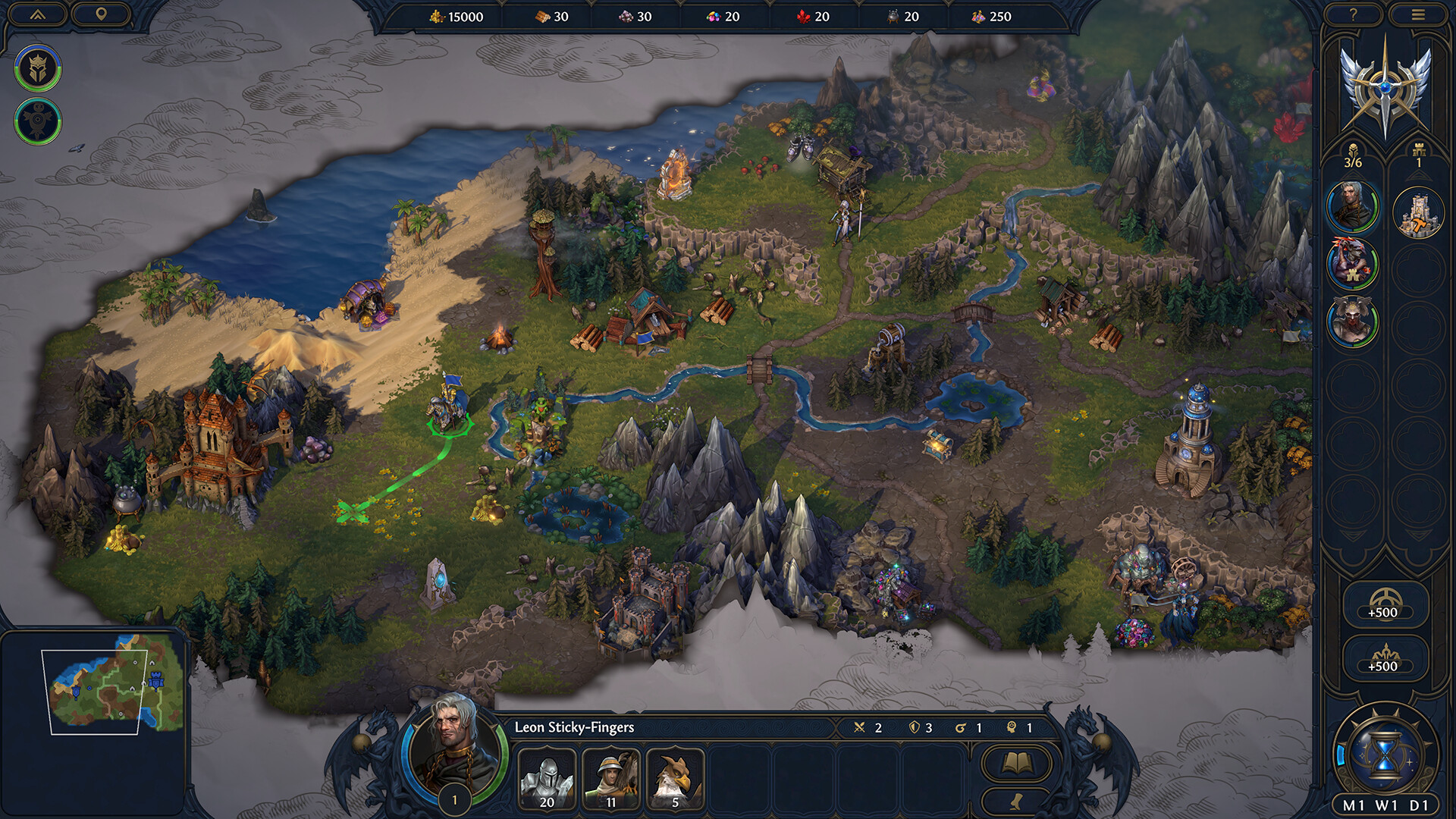
The most common early-game mistake is treating your starting hero like a Swiss Army knife — exploring, fighting, collecting, garrisoning, all at once. You'll move slowly, miss mines, and burn initiative on walking back to town.
The fix: split responsibilities from Day 1.
Hire a second hero from the Tavern by Day 2 or 3 and assign roles permanently:
- Main hero — fights everything. Full army, dedicated to clearing map sectors and claiming guarded mines. Never sends troops home unless necessary.
- Support hero — small escort, zero fighting. Their job is to trail behind the main hero collecting loose resources, ferry reinforcements from town, and flag any unguarded mines the main hero passes.
The support hero's movement covers ground that the main hero would have backtracked to cover, effectively doubling your map coverage. On the first Sunday (week end), your main hero should have a full army from recruitment. Your support hero should have flagged 4–6 mines without spending a single unit.
Week 1 economy goal: Town Hall → City Hall construction started on Day 1. Mage Guild Level 1 by Day 3–4. All nearby mines flagged by the Sunday reset.
2. Zero Casualties Isn't Perfectionism — It's XP Farming
When clearing neutral stacks, a lot of players accept "acceptable losses" — a few units here, a few there. This feels harmless, but it compounds badly.
The real reason to chase zero casualties: Law XP.
Every time you fully wipe out an enemy stack (no escapees, no partial retreats), you earn bonus Law Experience on top of normal combat XP. Law XP feeds into the Law system — a separate progression layer that lets you make major choices about your hero's identity: boosting economy multipliers, unlocking faction-specific unit traits, or strengthening spells permanently.
Practical rules for zero-casualty clearing:
- If you can't beat a stack without losing units, wait. Come back in a day or two with more troops.
- Never let enemies flee — use spells or fast units to intercept routers. A fleeing enemy stack that escapes gives you nothing.
- Use spells proactively. Even a Level 1 Slow or Blind from your Mage Guild changes the damage calculus completely.
The compounding effect is real: players who obsess over zero casualties end up with significantly more powerful Law upgrades by Week 3 compared to players who fought more but sloppily.
3. Magic in Olden Era Isn't What You Think
The magic system is one of the most misunderstood parts of this game, especially for veterans of earlier HoMM titles.
Key shift: spell levels are independent of your hero level.
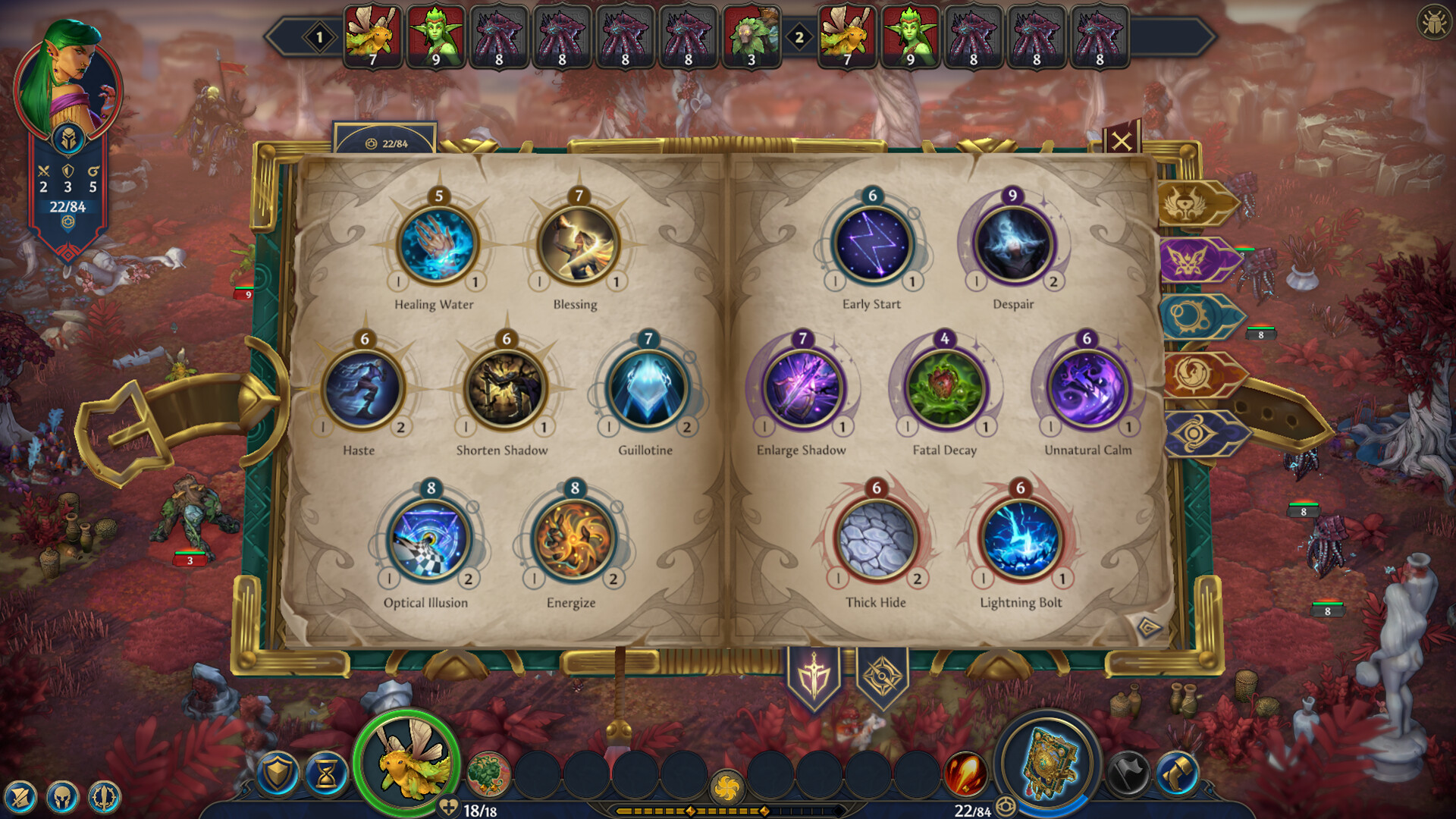
Spells have their own upgrade tier from Level 1 to Level 4, and the upgrade path doesn't automatically follow your hero's growth. To raise a spell's level, you need specific resources — primarily Alchemy Dust (found on the map at special shrines and resource caches) or Map Totem upgrades in the Mage Guild.
More importantly: the Mage Guild operates as a global cloud sync. Any spell your hero learns at a high-level Mage Guild (like in a captured city) is available everywhere — you don't need to visit every city to re-learn spells. This means:
- Prioritize capturing cities with higher-level Mage Guilds early.
- One trip to a Level 3 Mage Guild unlocks your entire spell roster for the campaign.
Managing Star Points (strategic ability cooldowns):
Strategic spells like Town Portal consume Star Points, not gold — but they share a cooldown pool. Don't spam Town Portal early in the day if you might need it defensively later. Star Points regenerate daily, so plan your strategic magic around the day cycle, not just combat needs.
Law XP allocation is where most players make irreversible mistakes. The temptation is to dump Law XP into immediate combat bonuses, but the real high-value choices are:
- Economy modifiers early (they compound every day for the rest of the map)
- Unit trait unlocks for your faction's key creatures (timing-dependent on when you reach certain tiers)
- Spell permanence upgrades only once you've committed to a specific school
Don't spread Law XP thin. Pick a lane and commit.
4. Nature Faction Unit Upgrades: The Choices That Actually Matter
If you're playing Grove (Nature faction), the unit upgrade tree is more branched than most factions — and more punishing if you upgrade without a plan.
Tier 1: Keep Thornshot archers in their base form for early clearing.
The Thornshot Archer (Tier 1 base form) has no range penalty, which makes them ideal for picking off neutrals without taking retaliation. Don't rush their upgrade until you have a real engagement that demands it — the upgrade cost is better spent elsewhere in Week 1.
Tier 3: The Iron Wall formation is your best tool against dangerous stacks.
Split your Iriad (Tier 3, extremely tanky) into multiple small stacks. Surround your fragile ranged units with these small Iriad stacks. A single large Iriad group is inefficient; distributed Iriad stacks act as body shields while your archers and mages output freely. This formation genuinely changes how many units you lose against "too strong" neutral camps.
Tier 4 — Brumal Niad — is your tempo controller.
This unit reduces the initiative and action speed of enemies it touches. In fights with multiple dangerous units, getting Brumal Niads into contact with the highest-threat enemies first effectively gives your whole army more turns. Build this timing into your battle setup before every fight.
Tier 5 and 6 diverge based on your hero type:
| Hero Path | Tier 5 Upgrade | Tier 6 Upgrade |
|---|---|---|
| Magic | Mist Kirin — inflicts -30% magic resist on enemies it faces, devastating with spell combos | Thorned Warrior — bunker, high armor, protection role |
| Might | Thunder Kirin — pure attack conversion, excellent against armored targets | Thornshot Elite — best sustained ranged damage in the faction |
Tier 7: Almost always go Blazing Phoenix over the alternative.
The Blazing Phoenix has the highest initiative in the faction, a built-in self-preservation passive that can save it from lethal hits, and an active ability that performs far above its tier in PvP where one good use can swing the entire battle. The main alternative Phoenix form is situationally powerful but the Blazing version's forgiveness makes it the safer competitive choice.
5. Online PvP: It Plays Like an RTS Until It Doesn't
Coming from the singleplayer experience, multiplayer in Olden Era can feel disorienting at first. The core reason: before armies make contact, the game functions like an RTS — both players are moving simultaneously, not in turns.
The moment two players breach each other's territory on the same day, the RTS transitions into the familiar turn-based resolution. Whoever destroyed the main garrison guard (GO) first that day gets Priority 1 — they resolve their turn before the opponent. This single moment decides much of how the early engagement plays out.
Practical PvP early-game rules:
Race to breach on the same day your opponent does. If you breach on different days, the system applies catch-up compensation to the later player — so the timing advantage matters most when both players push simultaneously.
Use Z to check zone boundaries before moving. This is a QoL feature that experienced players use constantly. Before committing a hero to a jump, press Z to see the exact border of your controlled zone. Blind jumps into unconfirmed territory is one of the most punishing and avoidable mistakes in competitive play.
The Ban/Pick draft (BP) is not optional in ranked modes. It works similarly to MOBA draft systems. If you're new to competitive play, prioritize banning the Nature faction's Tier 7 and any hero with very high base Logistics — these are the most tempo-defining early picks and the hardest to answer once established.
Don't ignore the late-entry compensation rule. If your opponent breaks through before you, you receive a turn-order bonus in the following day's resolution. Players who understand this will sometimes deliberately delay a breach to bait the opponent into overextending, then use the compensation priority to hit back harder.
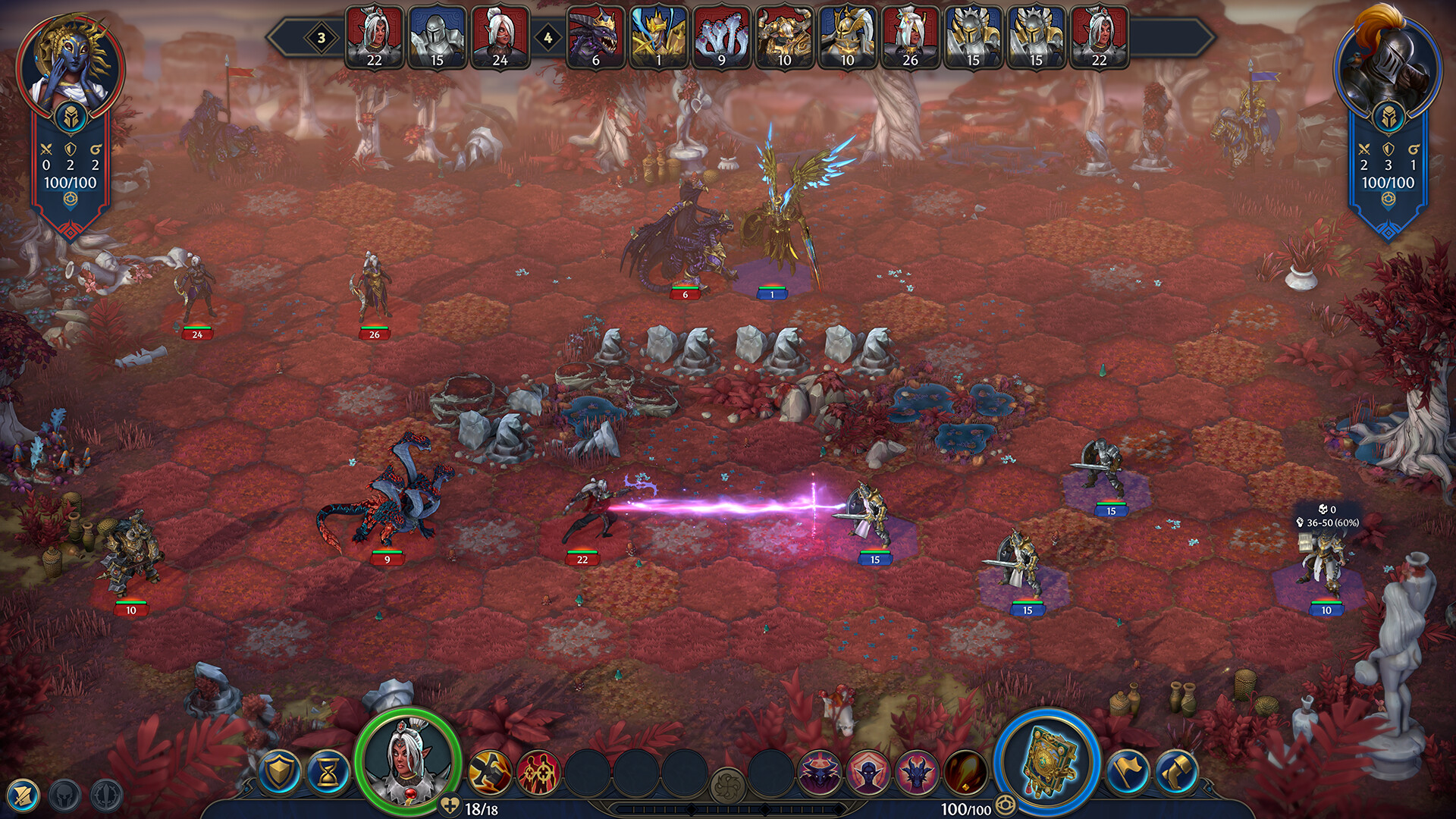
Bonus: Common Traps I See New Players Fall Into
A few things that don't fit neatly into the categories above but cost players a surprising amount:
Hero specialization must match your unit upgrade path. If you're running a Magic hero, your Tier 6 spell-synergy upgrade is gated behind the hero having a specific trait category ("Spellbinder" type). Check this before locking in your hero's specialization tree — choosing a trait that doesn't match your intended unit path means your Tier 6 upgrade will underperform significantly.
The Spellbook UI hides higher-level spells. This sounds trivial but it's genuinely easy to miss: spells above Level 2 are on a different tab in the Spellbook UI. Many players don't realize they've unlocked higher-tier spells because they never scroll or tab over. If a fight felt harder than it should have, open the full Spellbook — you might have had the answer sitting unused in a tab you didn't know existed.
Never release retreating enemies out of mercy. I know it feels wrong to chase down a fleeing unit. Do it anyway. Escaped units respawn over time, which means the same camp regenerates and blocks your territory. More importantly, you miss the full Law XP reward. In the early game especially, every full-wipe is a meaningful investment.
These five areas are where I see the biggest skill gap between players who stall out in Week 2 and players who snowball into dominance. None of it is particularly hard once you know it exists — the game just doesn't explain any of it clearly, which is exactly why sharing this stuff feels worthwhile.
Good luck out there. May your armies never retreat.